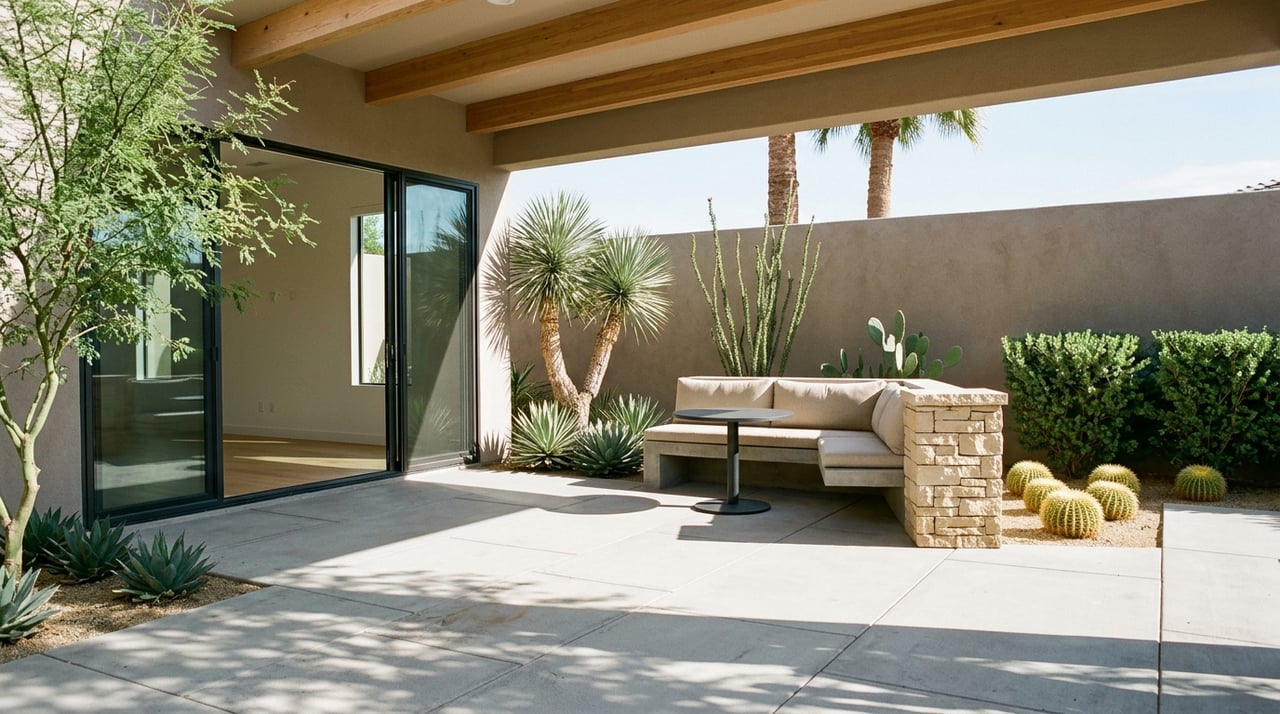
If you picture La Quinta as a place built only around golf, you are missing a big part of what daily life here actually feels like. For many buyers, the real question is not how close you are to a fairway, but how you want your days to unfold in the desert. This guide will help you understand the rhythm, amenities, and lifestyle patterns that shape La Quinta beyond the courses. Let’s dive in.
La Quinta lifestyle starts with the climate
In La Quinta, the weather does more than set the forecast. It shapes how you plan your mornings, afternoons, and evenings throughout the year. The city sits on the floor of the Coachella Valley near the Santa Rosa Mountains, and official climate data for the nearby Palm Springs area shows an annual mean high of 88.9°F, an annual mean low of 62.3°F, and just 4.61 inches of precipitation.
Summer is especially intense. Average highs reach 103.6°F in June, 108.6°F in July, and 108.1°F in August, with warm overnight lows in the 70s and near 80°F. In practical terms, that means many residents and visitors build their schedules around the heat.
You will often find that outdoor activity works best early in the day. Midday is more suited to indoor errands, workouts, or downtime, while evenings often become social again once temperatures ease. That pattern fits with the city’s resort identity and is reinforced by resources like the Wellness Center, which also serves as a heat-relief location during hot weather.
Outdoor life goes well beyond golf
La Quinta certainly has a strong golf identity, but the city’s own materials describe a much broader outdoor lifestyle. Residents and visitors can use bike paths, parks, swimming pools, sports fields, and hiking trails, all of which help define the area’s everyday appeal.
If you do not golf, you still have plenty of ways to enjoy the outdoors. That matters for buyers who want an active desert lifestyle without centering every weekend around tee times. In La Quinta, the appeal is often about variety and easy access to scenic recreation.
Trails are part of daily life
One of the clearest examples is the Cove Trail Network. City trail maps and guides highlight routes and trailheads including Cove to Lake, Boo Hoff, Bear Creek, and Palm Oasis. On the Cove side, many trails are described as mostly easy, with compacted sand and relatively flat terrain, while routes deeper into the hills become steeper.
For many people, that makes hiking here feel approachable. You can choose a simple morning walk with mountain views or plan for a more challenging route as you gain confidence. The city also recommends carrying water, using sun protection, and avoiding solo hikes.
Trail etiquette matters in La Quinta
La Quinta’s trail culture comes with an added layer of environmental awareness. The broader Coachella Valley habitat conservation framework protects more than 240,000 acres and 27 native species, so staying on designated paths and following posted restrictions matters.
That also helps explain why dog access is limited in some sensitive areas. This is not just a suburban trail system where rules are optional. It is part of a larger desert environment with protected habitats, and that gives outdoor life here a distinct sense of place.
Old Town offers a social center
Outside of golf communities, Old Town Village stands out as one of La Quinta’s main gathering areas. The city describes it as a place with boutique shops and restaurants, which gives you a picture of a smaller, walkable social core rather than a dense urban district.
That scale is part of the appeal. If you are looking for a relaxed place to meet friends, grab coffee, or enjoy a patio dinner, Old Town helps anchor that side of La Quinta living. It supports a lifestyle that feels social and convenient without feeling rushed.
Dining leans casual and patio-friendly
Public restaurant listings reinforce that atmosphere. Old Town Coffee is known for breakfast and lunch, outdoor dining, and a sidewalk café on select evenings. Lola’s at the Cove is described as a modern, chef-driven casual restaurant in Old Town, while Lavender Bistro emphasizes outdoor dining and RD RNNR is positioned as a farm-to-table favorite in the heart of Old Town.
Taken together, the pattern suggests a dining scene built more around brunch, patio meals, and relaxed dinners than around late-night intensity. For second-home buyers or full-time residents, that can be a meaningful part of the area’s appeal. You are not just buying a house. You are choosing the kind of social rhythm that fits your life.
Arts and culture shape the city’s identity
La Quinta also has a civic and cultural side that is easy to overlook if you focus only on resort marketing. The city’s Art in Public Places program describes art as an important part of La Quinta’s character and ties it to the city’s social and environmental growth.
Throughout the city, public sculptures and murals add another layer to the local experience. For buyers who value design, culture, and a stronger sense of place, that matters. It gives the community texture beyond recreation alone.
The museum adds local context
Near Old Town, the La Quinta Museum presents the area’s history and cultural arts. The museum also offers family programming, special events, and exhibit hours from Tuesday through Saturday, 10 a.m. to 4 p.m.
For someone getting to know the city, that kind of resource can deepen your understanding of the place. It also shows that La Quinta offers more than scenic views and private amenities. There is a public-facing cultural life here as well.
Wellness and events support year-round living
The Community Services Department oversees a wide mix of programs, including the Wellness Center, recreation programs, public art, and special events. Signature events such as Concerts in the Park and the Veterans Recognition Ceremony help show how civic life extends beyond fixed amenities.
That can be important if you are thinking about spending more time in La Quinta or making it your primary home. A community often feels more livable when there are shared spaces, organized programs, and recurring events that bring people together. In La Quinta, that broader framework supports the resort setting rather than competing with it.
The Wellness Center fits desert living
The Wellness Center is especially relevant because it reflects the practical side of life in a hot desert climate. It offers early hours, classes, and a cool-space function during periods of intense heat.
That kind of infrastructure matters when you are evaluating lifestyle, not just aesthetics. Beautiful surroundings are important, but so is knowing a city is equipped for day-to-day comfort during the hottest months.
What buyers should expect day to day
If you are considering a home in La Quinta, it helps to think less about a single amenity and more about your daily rhythm. The city’s climate, trail system, dining patterns, public spaces, and cultural offerings all point to a lifestyle that is active early, slower in the afternoon, and social again in the evening.
That pace appeals to many buyers looking for a desert home, especially those who want a second home or lifestyle property that feels restorative rather than hectic. You may come for the mountain views or architecture, but the long-term fit often comes down to how naturally your routines align with the setting.
In La Quinta, that means embracing the desert on its own terms. You plan around the sun, take advantage of mornings, appreciate shaded patios, and make room for both recreation and downtime. For many buyers, that is exactly the point.
If you are exploring La Quinta as a full-time move, a seasonal retreat, or a lifestyle investment, working with a brokerage that understands both the local rhythm and the details behind a strong transaction can make the process far more informed. To talk through neighborhoods, property types, and what fits your goals, schedule a consultation with Luca Volpe.
FAQs
What is daily life in La Quinta like for non-golfers?
- La Quinta offers hiking trails, bike paths, parks, pools, museum visits, public art, wellness programming, and dining in Old Town, so your lifestyle does not need to revolve around golf.
What does summer weather in La Quinta feel like?
- Summers are very hot, with average highs above 103°F in June and above 108°F in July and August, so many people shift outdoor activity to early mornings and evenings.
What are La Quinta Cove trails like for beginners?
- The Cove side includes many mostly easy trails with compacted sand and relatively flat terrain, though routes farther into the hills can become steeper.
What is Old Town La Quinta known for?
- Old Town serves as a walkable social hub with boutique shops, restaurants, outdoor dining, and a relaxed gathering atmosphere.
What cultural amenities are available in La Quinta?
- La Quinta features public art across the city, an annual arts festival connection through the local arts foundation, and the La Quinta Museum with exhibits, events, and family programming.